The title feels cinematic, and that is no coincidence. Both the aspect of "cinematic-ness" and the aspect of "seeming" are present in the exhibition. They hover like ghosts. Shapes are familiar, yet their essence spills out from them. I see something, but it is not what it appears to be. A semblance, an afterimage, a delusion. The exhibition features the work of three artists: Olaf Brzeski, Marta Niedbał, and Julia Zborowska.
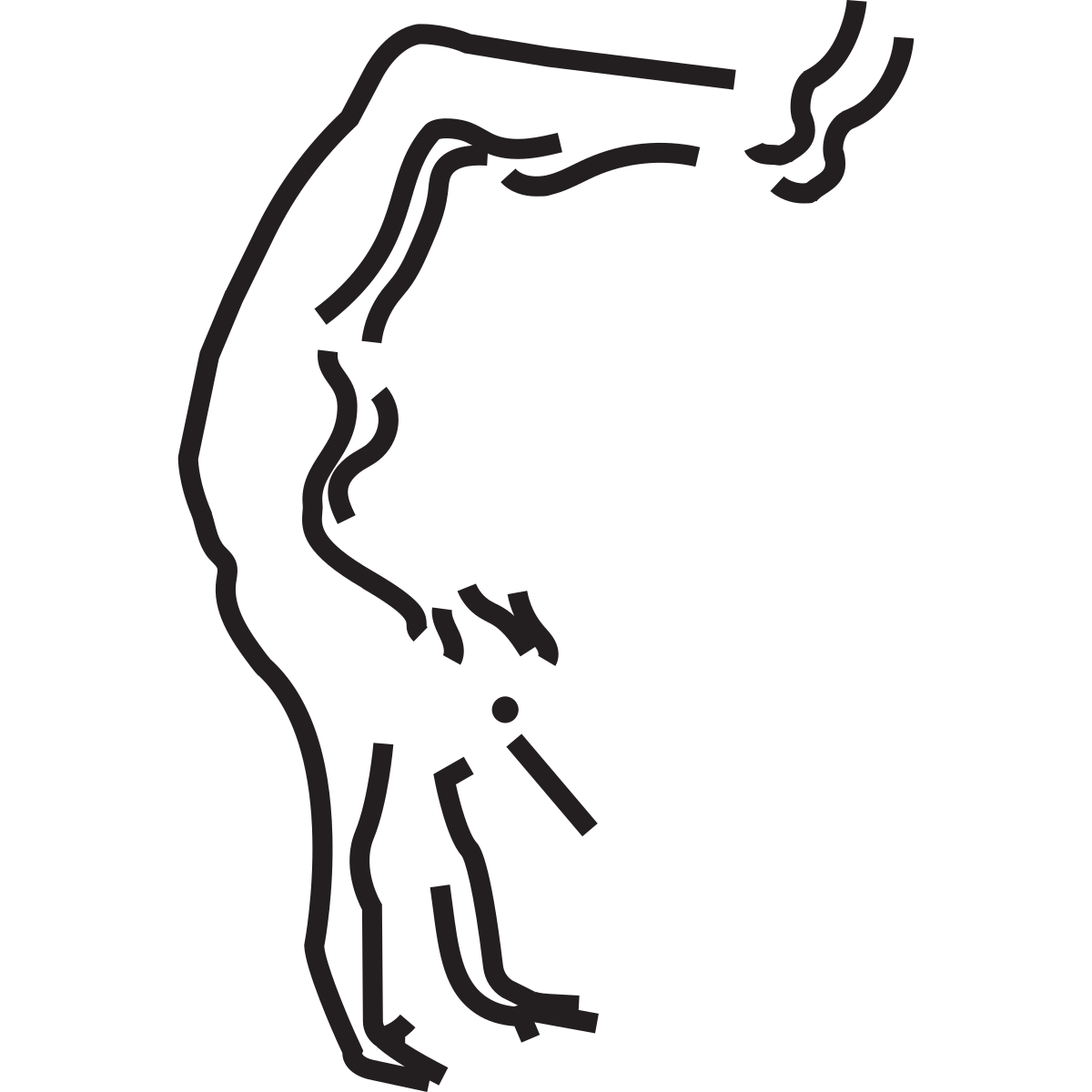
Olaf Brzeski, known primarily for his sculpture, shows drawings made in a notebook with a felt-tip pen at o/b/c/y. These are frames of a story titled Nóż w złodzieju ("A Knife in a Thief"). They can be arranged in any order, frames added or subtracted. Treating them like a storyboard, one could film several different movies. A figure in a quilted jacket looks toward the moon. Beside them stands a dog/non-dog. It seems to be in profile. The head merges with the torso. The ground gives way beneath one’s feet. A tangle of lines winds and offers no support. Front is confused with back. In another frame, a lion hybrid tears apart a naked figure against a backdrop of paintings inside a museum. A lopsided figure flees, a shadow of the midday sun spreading beneath them. The figure attempts to grab a knife stuck in their back. A knife in a thief.
Marta Niedbał is most often associated with large-format textiles, where she draws faces and vortices with broken woven lines. The images/fabrics are perforated. The gap creates a space for a body to fit in. In the exhibition On the Edge, Marta presents two ceramic objects and drawings/objects from the series Z fontanny mokrych życzeń ("From the Fountain of Wet Wishes"). The objects seem like shamanic spells—cult figurines or tools for an unknown rite. Images painted with menstrual blood resemble icons but also ritual paintings intended to enchant or appease. All these works are linked by their intimate character and diary-like record.
Julia Zborowska, a visual artist and film director, joins this meeting with a fragment of her Instax photograph series. These instant photos, which she has taken for years during film shoots (as alternative shots or entirely privately, as frames from films that never existed), are placed by Julia in old, found frames. The photographic frames combined with historical frames create objects. These photos do not resemble the spontaneous shots we have come to expect from instant photography. They are strange, to say the least. A chicken bathes in a sink in an ordinary bathroom. A girl in an oversized hat and shoes stands between twin beds. A dark-skinned man with a porcelain cup poses against eighteenth-century frescoes depicting fantastic animals and dark-skinned servants. The bodies of the figures in the photos are as if flattened, devoid of contours. They seem to be—or are—specters. Their spectral or phenomenal nature piles up questions about the status of what we are looking at. Julia Zborowska’s photos resemble collages more than photographs. The uncertainty of the status of the objects we view makes them appear as if balancing on the edge. On the edge of recognition, on the edge of the beautiful and the terrifying. They invite and repel. They reveal and conceal.
Artists:
Olaf Brzeski, Marta Niedbał, Julia Zborowska
Curators:
Anna Maria Karczmarska, Mikołaj Małek